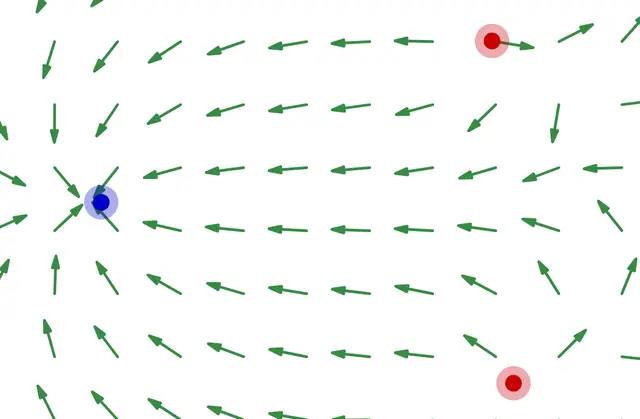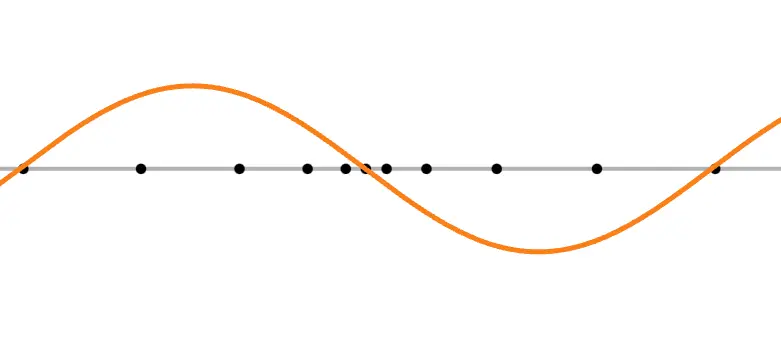
A longitudinal wave is a type of wave where the medium vibrates in the same direction as the wave travels. This time, let's explore longitudinal waves through an animation!
Animation
What is a Longitudinal Wave?
The key characteristic of a longitudinal wave is that the medium vibrates in the same direction as the wave's movement. In the animation, you can see how the density of the medium changes as the wave moves forward. This is why it's also called a compression wave.

As shown in the image above, the shape of a longitudinal wave is quite different from that of a transverse wave. However, the medium's vibration direction is simply rotated by 90 degrees, so the medium still undergoes simple harmonic motion, just like in a transverse wave.
Representing Longitudinal Waves as Transverse Waves
Longitudinal waves can be tricky to visualize as they are. By rotating the medium's vibration direction by 90 degrees to align with that of a transverse wave, they become much easier to understand.
Specifically, the medium's vibration direction in a longitudinal wave is rotated 90 degrees counterclockwise, as shown below:
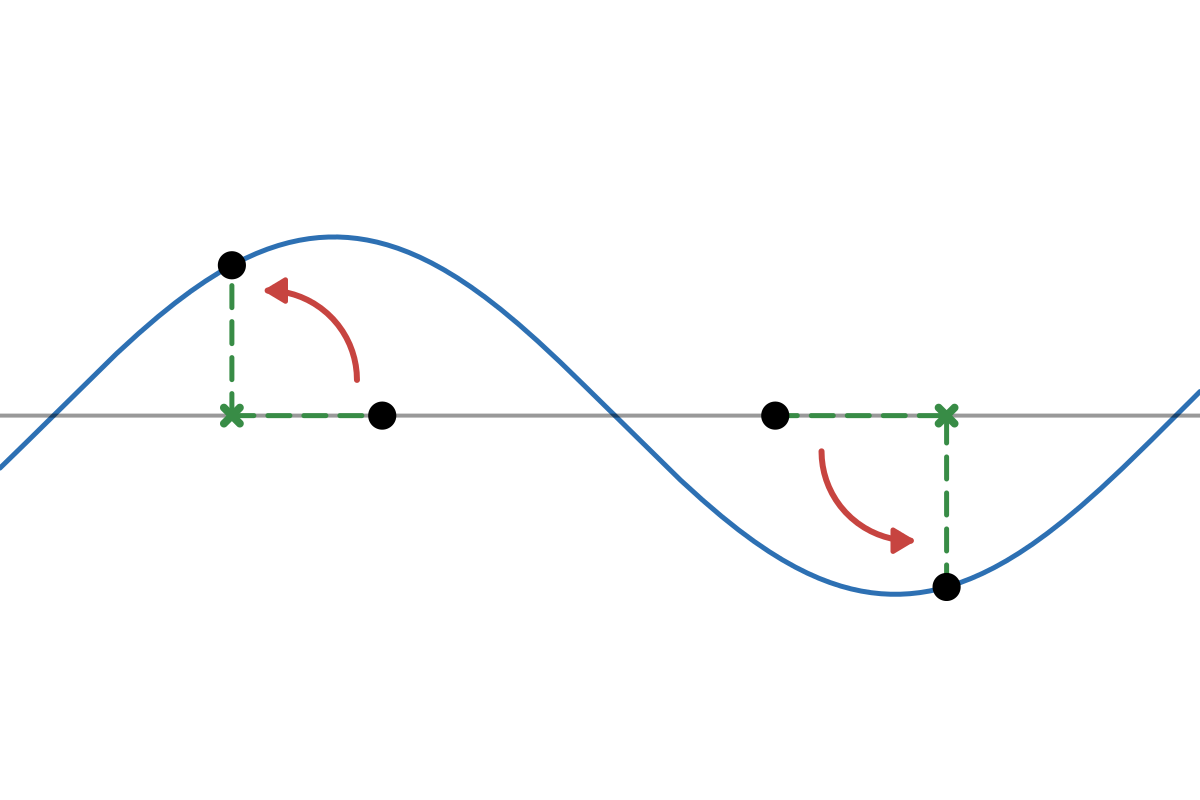
By doing this, longitudinal waves can be represented as transverse waves!
Rarefied and Compressed Points
As mentioned earlier, longitudinal waves involve changes in density that propagate through the medium. When displayed as transverse waves, where do the low-density (rarefied) and high-density (compressed) points appear?
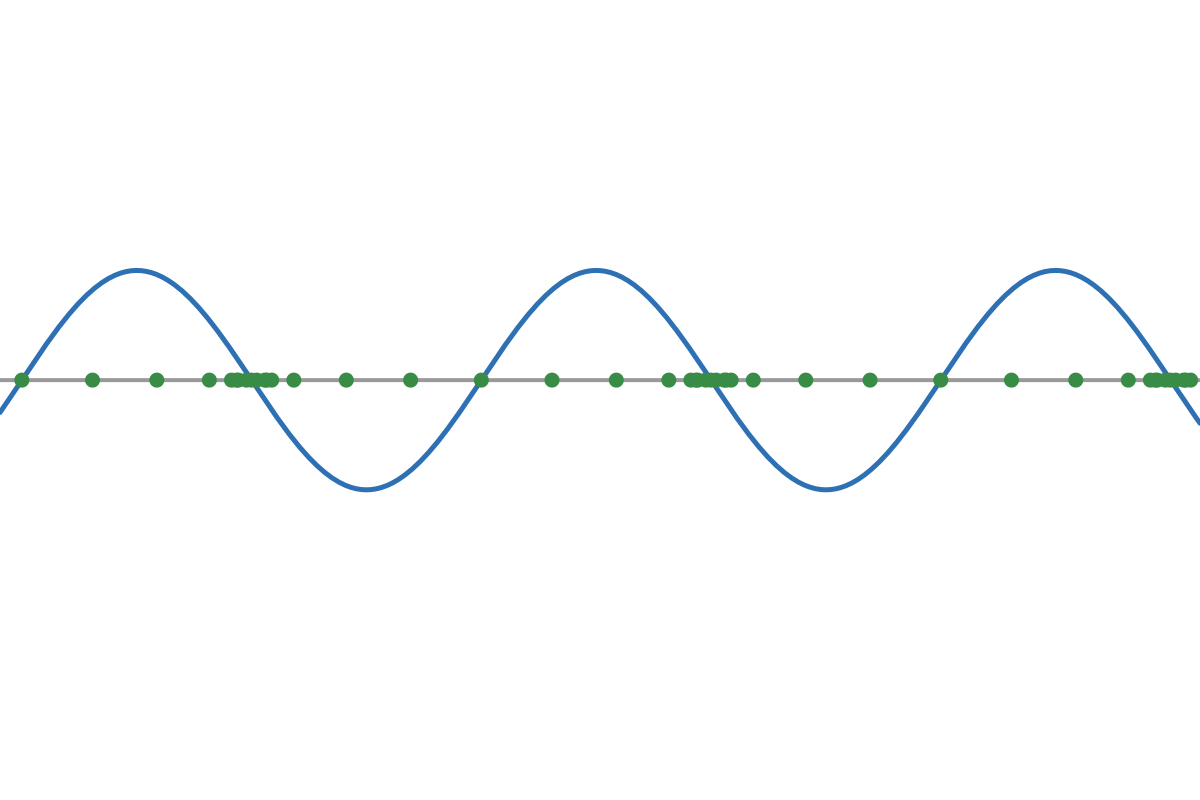
As shown in the image above, rarefied and compressed points occur where the displacement in the transverse wave representation is zero. Among these, points with a positive slope are rarefied, while those with a negative slope are compressed.
Examples of Longitudinal Waves
The most common example of a longitudinal wave is a sound wave. Sound waves travel through variations in air density.
Another example is P-waves in earthquakes, which are longitudinal waves. In contrast, S-waves are transverse waves. Since P-waves travel faster, they reach the observer before S-waves.