
Do you know about the foil electroscope?
A foil electroscope is an experimental tool that can visualize whether an object is charged, as well as the polarity and magnitude of its charge. It is a famous tool often used in physics experiments, so even if you haven't seen one, many of you might have heard of it.
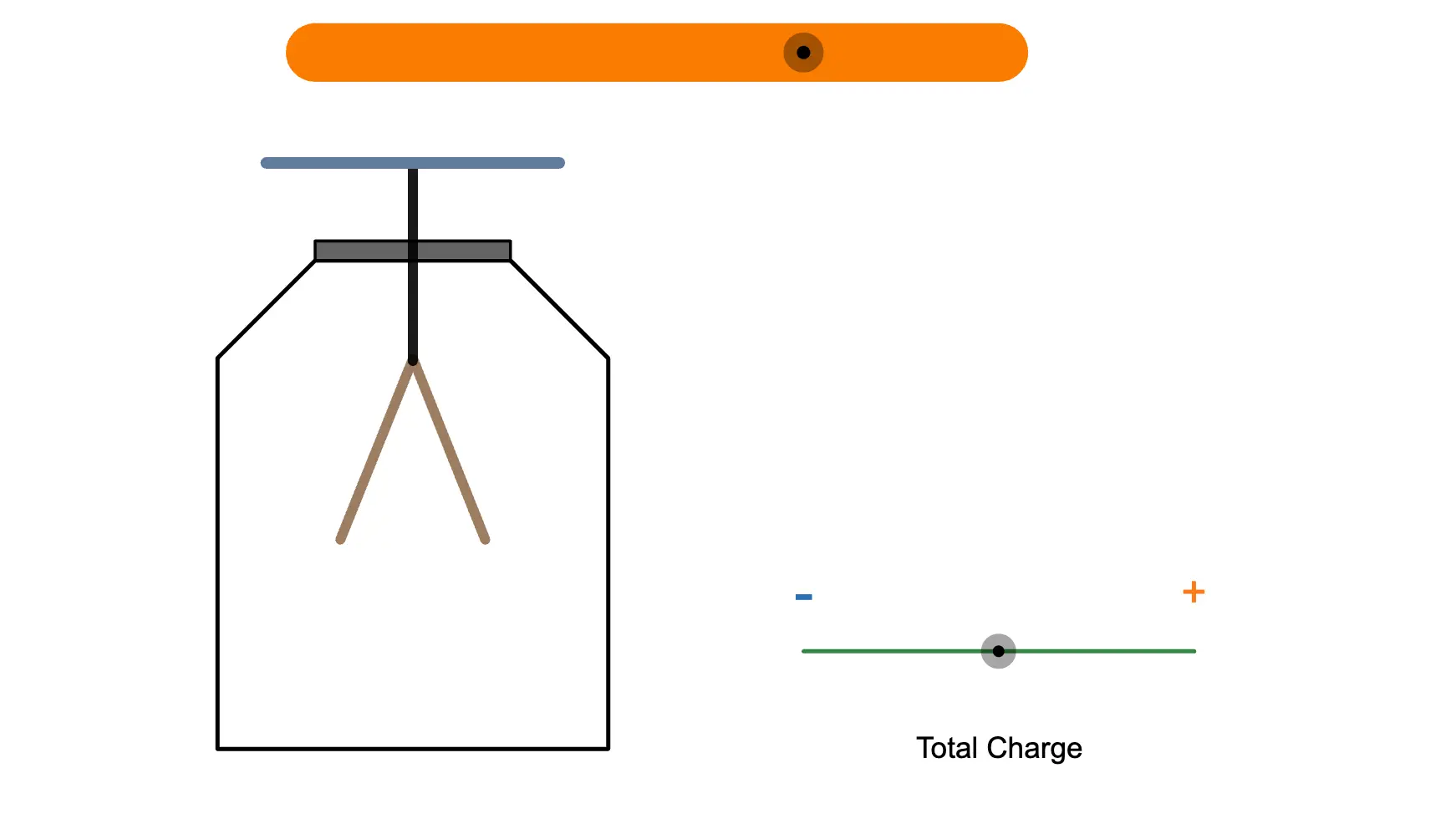
Let's play with a simulated foil electroscope using a graph this time!
Foil Electroscope
By dragging the black dot of the charged object, you can bring the charged object closer to the electroscope.
Additionally, clicking on the top surface of the electroscope allows you to ground it (touch it with your hand), and clicking on the charged object allows you to reverse the polarity of its charge!
In the diagram above, the electroscope and the charged object are represented in dark orange when positively charged, dark blue when negatively charged, and gray when electrically neutral.
You can reset the graph to its initial state at any time by pressing the rounded button in the top-right corner of the graph.
Let's Experiment
Initially, the electroscope is electrically neutral, with the number of positive and negative charges balanced.
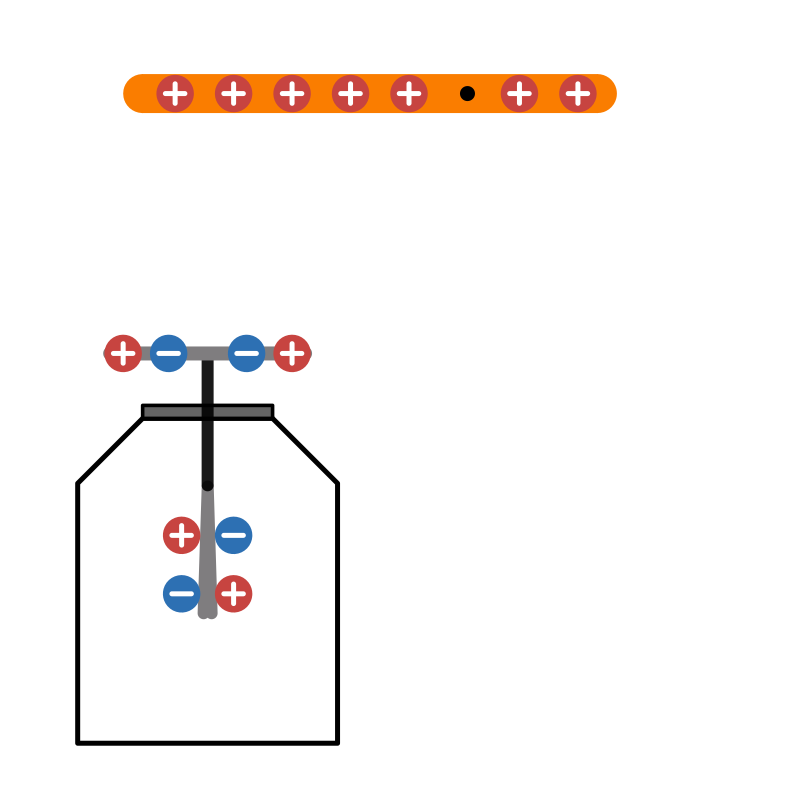
Bring the Charged Object Closer
First, let's bring a positively charged object (an object with fewer electrons than usual) closer to the electroscope.
(Drag the black dot downward.)
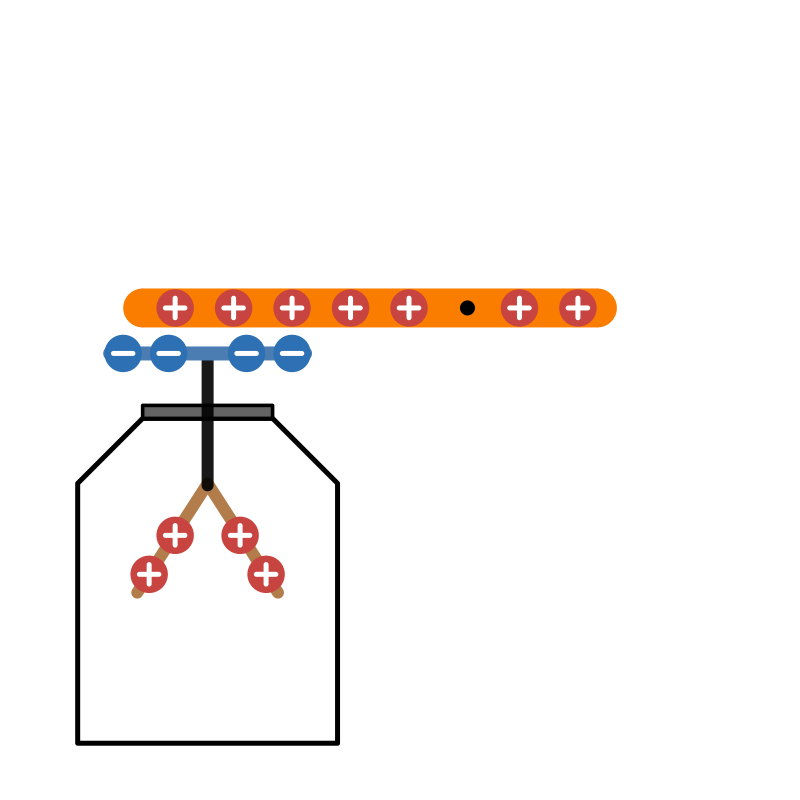
As shown, the negative charges in the foil are attracted to the charged object, and the positive charges are repelled downward, causing the foil to open positively charged.
(Note that charges with the same sign repel each other.)
Touch the Metal Plate (Grounding)
Next, click on the metal plate at the top of the electroscope. This simulates touching the metal plate with your hand (grounding the metal plate).
.b2df00e4.svg)
The positive charges escape to the finger, and the foil becomes electrically neutral and closes. The negative charges are attracted to the charged object and cannot escape!
Remove the Charged Object
Finally, let's move the charged object away from the electroscope.
.d1350f15.svg)
The negative charges that were attracted to the charged object spread throughout the electroscope, causing the foil to open negatively charged again.
(The movement of charges is conceptual. In reality, positive charges (protons) are bound to the atomic nucleus and cannot move. Areas with fewer electrons compared to protons are relatively positively charged.)
Quiz
Now, let's get familiar with the electroscope through the following two quizzes!
Manipulating the total charge of the electroscope in the bottom-right corner of the graph is prohibited, as it is not possible in real experiments.
Question 1
By performing a certain operation, you can make the foil open wider than in the previous experiment. What operation would achieve this?
First, return to the final state of the previous experiment.
.2db15f5c.svg)
Then, click on the charged object to reverse its charge to negative and bring it closer again.
.49b37f14.svg)
This will make the foil open wider than before.
Question 2
In a certain state, a charged rod was gradually brought closer to the electroscope from the farthest position. During this operation, the foil initially opened, then gradually closed, and finally opened again. Recreate the initial state.
First, bring the charged object about halfway closer from the initial state.
.089804e4.svg)
When the foil is slightly open, click on the metal plate to ground it.
.283a525a.svg)
Once the foil is closed, move the charged rod away from the electroscope to achieve the desired state.
.f2f73e27.svg)
From this state, gradually bring the charged object closer. You should observe the foil closing once and then opening again.